
This article builds on earlier foundational concepts introduced in our original 2012 post on performance-based pay. Performance-based pay has evolved significantly over the past decade. Once viewed primarily as a tactical tool to boost short-term productivity, it is now recognized as a strategic lever that shapes organizational culture, employee engagement, and long-term business outcomes. For […]
Leadership & Workforce Strategy
Insights on leadership, management effectiveness, employee engagement, culture, hiring, and building high-performing organizations.
Tips for Managers on Giving Feedback to Employees

Providing meaningful feedback to employees is one of the most important responsibilities of a manager – and one of the most commonly avoided. Even experienced leaders sometimes struggle with when to give feedback, how to frame it, and how to ensure it motivates rather than discourages employees. Yet feedback is one of the most powerful […]
Managers, Do You Rule Your Office by Fear?

Why Fear-Based Leadership Creates Short-Term Compliance and Long-Term Damage. Every manager motivates employees in one way or another. The real question is how. Some leaders rely on compensation and incentives. Others emphasize recognition, growth, or mission. And then there are those – often unintentionally – who rely on fear as their primary management tool. Fear shows […]
Why Burnout Is a Leadership Failure, Not a Personal One
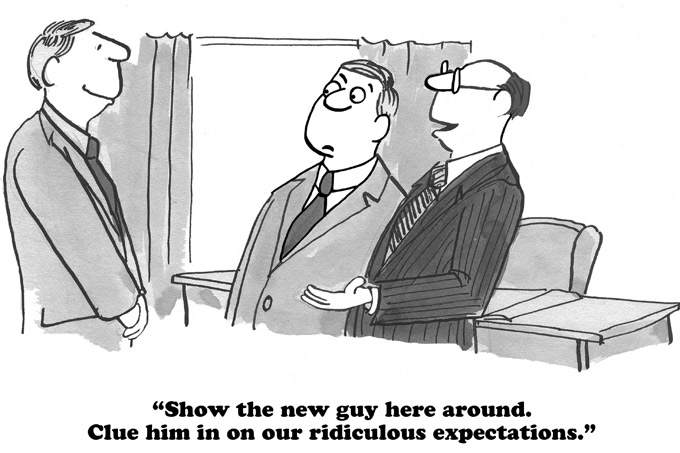
Burnout is often treated as a personal weakness. When employees become exhausted, disengaged, or emotionally depleted, the conversation tends to focus on their resilience, their boundaries, or their coping skills. They are encouraged to practice self-care, attend mindfulness sessions, take a vacation, or “manage stress better.” While these tools can be helpful, they obscure a far […]
Four Strategies for Addressing Company Conflict

Conflict is an inevitable part of organizational life. Whenever people work together – particularly in fast-moving environments where priorities, personalities, and pressures collide – disagreements are bound to occur. While many leaders view conflict as something to eliminate, the reality is that some level of disagreement is not only normal but also potentially productive when […]
5 Ways to Create a Motivating Work Environment

What truly motivates employees on a day-to-day basis? Is it the paycheck? The annual bonus? A quarterly incentive or the occasional team lunch? Compensation and perks matter, of course – but most leaders discover quickly that they are not enough. Pay may influence whether someone accepts a job or stays employed, but it rarely fuels consistent […]
Should You Work More Than 40 Hours a Week?

For decades, long work hours have been worn as a badge of honor. Fifty, sixty, and even seventy-hour workweeks are often framed as evidence of commitment, ambition, and leadership potential. In many organizations, employees who stay late are perceived as more dedicated than those who leave on time – even when results do not support […]
How Much Time Do Your Employees Waste on the Internet?

Why the Real Productivity Problem Isn’t the Web – It’s Leadership, Expectations, and Design. Long before computers dominated the workplace, employees found ways to waste time. They doodled, flipped through magazines, lingered in break rooms, listened to the radio, or stared out windows lost in thought. Productivity leaks have always existed wherever human beings work. […]
Practical Steps Boards Can Take to Rebalance Power in Founder-Led Nonprofits

Founder-led nonprofits are common, and founders bring vision, energy, and credibility to the organization. However, when a founder dominates decision-making, overrides leadership, and sidelines the board, the nonprofit’s sustainability, mission, and staff morale can be compromised. Boards that fail to act may inadvertently allow the organization to become little more than an extension of the […]
When a Board Becomes Too Loyal to Leadership

Healthy governance depends on a delicate balance: trust without complacency, support without dependency, partnership without capture. Across corporations, nonprofit organizations, and educational institutions, strong CEO-board relationships are often celebrated as signs of stability. And rightly so. Alignment at the top reduces friction, strengthens strategic coherence, and enhances institutional confidence. But there is a point at […]
7 Signs Your Company Has a Toxic Culture

Organizational culture is one of the most powerful forces shaping the success or failure of a company. It influences how employees treat one another, how decisions are made, how problems are solved, and how customers are served. In healthy organizations, culture encourages collaboration, accountability, and respect. Employees feel motivated to contribute their best work, and […]
10 Signs a Leader Doesn’t Understand Strategy

Strategy is one of the most important responsibilities of leadership, yet it is also one of the most commonly misunderstood. Almost every organization claims to have a strategy. There are strategic plans, strategic priorities, strategic initiatives, strategic retreats, and presentations filled with language about growth, innovation, transformation, and excellence. But calling something strategic doesn’t make […]
Rethinking the Return-to-Office Push: Why Smart Employers Should Embrace Remote Work

For decades, the default assumption in American business culture was simple: if employees were not physically present in the office, they probably were not working very hard. Before the pandemic, I shared some of that skepticism myself. Like many executives and business leaders, I believed productivity, accountability, and collaboration required employees sitting in the same […]
What to Do When a Client Goes Bankrupt

When a Client Goes Bankrupt: Hard Realities, Smart Responses & Lessons for the Future. Over the course of a 20-year consulting career serving companies, nonprofits, and educational institutions across the United States and internationally, I have experienced nearly every type of client challenge. Most engagements have been rewarding, productive, and built on mutual trust. A […]
Board Drift in Mission-Driven Organizations

Boards are the guardians of mission. They provide oversight, ensure fiduciary responsibility, and guide strategic direction. For mission-driven organizations, the board’s role is particularly critical: they exist not merely to ensure financial compliance, but to preserve and advance the mission, balancing vision with sustainability. Yet even the most well-intentioned boards are susceptible to a subtle […]