• Skip to main content
  • Skip to primary sidebar
  • Skip to footer

Andrew Jensen

  • Home
  • About
  • Services
    • Business Growth Consulting
      • Business Startup Consulting
      • Business Coaching
      • Business Strategy Consulting
      • Business Innovation Consulting
      • Business Efficiency Consulting
      • Turnaround Business Consulting
    • Customer Experience Consulting
      • Customer Experience Strategy Consulting
      • Customer Service Consulting
    • Marketing & Advertising Consulting
      • Business Marketing Consulting
      • Public Relations Consulting
      • Internet Marketing Strategies
      • Digital Advertising Consulting
        • Internet Advertising Consulting
        • Google Ads Consulting
        • Microsoft Ads Consulting
        • YouTube Ads Consulting
        • Facebook Ads Consulting
        • Instagram Ads Consulting
      • Search Engine Optimization Consulting
      • Website Analytics Consulting
    • Charitable Giving Consulting
  • FAQs
    • Why Andrew?
  • Insights
    • Leadership & Workforce Strategy
    • Growth & Financial Strategy
    • Marketing & Customer Experience
    • Digital & Technology Strategy
    • Productivity & Efficiency
    • Organizational Communication
    • Entrepreneurship & Startups
    • Nonprofit Strategy
  • Contact
    • Contact Andrew
    • Media Inquiries
    • Public Speaking
    • Board of Directors Service
    • Partners
Home » 10 Mistakes That Destroy Small Businesses

Updated on May 7, 2026 by Andrew Jensen Leave a Comment

10 Mistakes That Destroy Small Businesses

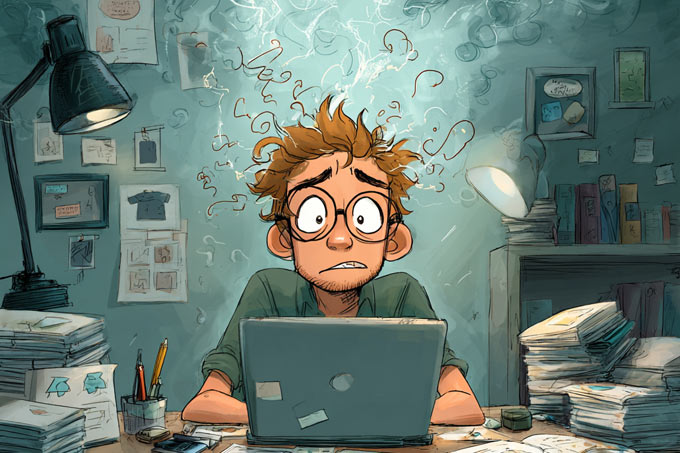
entrepreneur panicking while sitting at his desk behind his laptop
Small businesses are the backbone of the economy. They create jobs, drive innovation, and bring energy to communities. Yet despite the passion and dedication of their founders, many small businesses struggle to survive.

Over the years, I have advised companies across a wide range of industries, and while every situation is unique, certain patterns appear again and again. In many cases, businesses do not fail because of a single catastrophic event. Instead, they decline because of a series of avoidable mistakes.

Understanding these common pitfalls can make the difference between a business that grows and one that quietly disappears.

Mistake #1: Starting Without a Clear Strategy

Many entrepreneurs begin with a strong idea but very little strategic planning. They focus on launching quickly, hoping they will figure things out along the way.

While flexibility is valuable, a lack of strategy often leads to confusion about priorities, target customers, and growth direction. Without a clear plan, businesses tend to chase too many opportunities at once and spread their resources too thin.

Successful small businesses typically have a clear vision of where they want to go and a realistic plan for getting there.

Mistake #2: Ignoring Cash Flow

Cash flow problems are one of the most common reasons small businesses fail.

A company may appear profitable on paper, but if cash is not coming in quickly enough to pay expenses, the business can quickly find itself in trouble. Late customer payments, unexpected expenses, and poor financial planning can all create serious pressure.

Many small business owners focus heavily on sales while underestimating the importance of managing cash flow carefully.

Mistake #3: Trying to Do Everything Alone

Entrepreneurs often feel that they must handle every aspect of the business themselves. In the early stages, this may be necessary. But as the business grows, attempting to manage everything alone becomes a major obstacle.

Owners who refuse to delegate or build a capable team eventually become the bottleneck in their own organization.

Strong businesses grow when leaders surround themselves with people who bring complementary skills and expertise.

Mistake #4: Failing to Understand the Customer

Some businesses become so focused on their product or service that they lose sight of the people they are trying to serve.

When a company fails to truly understand its customers – their needs, expectations, and frustrations – it becomes difficult to deliver meaningful value.

The most successful businesses constantly listen to their customers and adapt accordingly.

Mistake #5: Weak Marketing

A surprising number of small businesses rely almost entirely on word-of-mouth marketing. While referrals can be powerful, they are rarely enough to sustain long-term growth.

Without a consistent marketing strategy, businesses often struggle to attract new customers and expand their reach.

Effective marketing is not simply about advertising. It is about clearly communicating value and consistently building awareness and trust with the right audience.

Mistake #6: Poor Financial Discipline

Financial discipline is critical to the survival of any business.

Some small businesses overspend during periods of early success, assuming that growth will continue indefinitely. Others fail to track key financial metrics closely enough to detect problems early.

Healthy businesses maintain strong financial controls, monitor performance regularly, and make careful decisions about spending and investment.

Mistake #7: Growing Too Quickly

Growth is exciting, but rapid expansion can create serious challenges if it is not carefully managed.

Businesses that grow too quickly may struggle with operational inefficiencies, declining customer service, and internal chaos. Hiring too fast, expanding into new markets prematurely, or taking on excessive debt can all create instability.

Sustainable growth usually happens in stages, with systems and leadership capacity evolving along the way.

Mistake #8: Ignoring Operational Efficiency

Operational problems rarely appear overnight. They tend to develop gradually as small inefficiencies accumulate.

Unclear processes, outdated systems, and poor communication can all reduce productivity and increase costs. Over time, these inefficiencies can make it difficult for a business to compete.

Organizations that regularly review and improve their operations are far more likely to remain competitive.

Mistake #9: Avoiding Difficult Decisions

Every business eventually faces difficult decisions – whether it involves changing direction, letting go of a failing product, or addressing performance issues within the team.

Some leaders delay these decisions because they hope problems will resolve themselves. Unfortunately, the opposite usually happens. Problems that are ignored tend to grow larger and more costly over time.

Strong leaders confront challenges directly and make timely decisions, even when those decisions are uncomfortable.

Mistake #10: Losing Focus on the Core Business

As businesses grow, new opportunities inevitably arise. While expansion can be beneficial, it can also distract companies from the core activities that made them successful in the first place.

Some businesses attempt to offer too many products, serve too many markets, or pursue unrelated ventures. This loss of focus often weakens the organization’s competitive advantage.

Successful companies remain disciplined about protecting their core strengths while exploring new opportunities carefully.

My 2 Cents: The Reality of Small Business Success

Building a successful small business is rarely easy. It requires persistence, adaptability, and continuous learning.

The good news is that most of the mistakes that destroy businesses are preventable. By recognizing these common pitfalls early and addressing them proactively, entrepreneurs dramatically improve their chances of long-term success.

In many cases, the difference between businesses that struggle and those that thrive is not luck or even the quality of the original idea. It is the willingness to learn, adjust, and lead with clarity and discipline.


Filed Under: Entrepreneurship & Startups

This article may be referenced in academic or professional training settings.

Additional Articles

superhero female successful entrepreneur
When You Encounter the Feeling of “Been There, Done That” as an Entrepreneur
entrepreneur husband and wife with money issues
Coming to Terms With Money as an Entrepreneur
confident first time entrepreneur woman
10 Mistakes First-Time Entrepreneurs Make (and How to Avoid Them)
busy entrepreneur sitting at his desk
The Emotions of Entrepreneurship: The Busy Phase

About Andrew Jensen

Andrew Jensen is a business growth, efficiency, and marketing consultant with Sozo Firm Inc., advising organizations nationwide across the United States and internationally. With 20 years of experience, he helps small to mid-sized businesses, academic institutions, government agencies and nonprofits streamline operations and drive sustainable growth. Andrew is based just north of D.C. in New Freedom, PA.

Engage Andrew Jensen | Press & Media Inquiries | Public Speaking

Reader Interactions

Comment Policy: To help prevent spam and keep discussions readable, submitted comments may not include HTML or links.

Leave a Reply Cancel reply

Your email address will not be published. Required fields are marked *

3 × four =

Primary Sidebar

Search

Have a Question?

Some of my favorite articles have been inspired by thoughtful questions from readers.

If there's a business, marketing, leadership, nonprofit, education, or technology topic you'd like me to explore, I'd love to hear from you.

👉 Submit a Question →
sketch of Andrew Jensen, consultant

Work with Andrew Jensen

20 years of experience helping companies, nonprofit organizations, and educational institutions grow, improve performance, and navigate change.

👉 Schedule a Consultation →

For Readers & Educators

A brief welcome and a few thoughts on the purpose of this site and the practical ideas shared here.

👉 Read the Welcome →

Featured Articles

  • Lessons Learned Building a Startup in the Age of AI
  • 10 Mistakes First-Time Entrepreneurs Make (and How to Avoid Them)
  • How to Validate a Business Idea Before You Waste Time and Money
  • Why Most Small Businesses Fail Within 2 Years
  • Coming to Terms With Money as an Entrepreneur
  • Self-Doubt and Other Emotional Phases of Entrepreneurship
  • The Second Thoughts Phase of Entrepreneurial Emotions
  • The Emotions of Entrepreneurship: The Busy Phase
  • When You Encounter the Feeling of “Been There, Done That” as an Entrepreneur
  • 10 Mistakes That Destroy Small Businesses

Recent Articles

  • What Does a Board of Directors Actually Do?
  • Don’t Optimize for AI. Become the Kind of Organization AI Wants to Trust.
  • Innovation Without Hype: What Actually Works in Higher Education Reform
  • When You Encounter the Feeling of “Been There, Done That” as an Entrepreneur
  • Sound & Noise in the Workplace: The Unseen Productivity Drain

Categories

Entrepreneurship & Startups

  • When Clients Stop Paying: Lessons Learned
  • What to Do When a Client Goes Bankrupt
  • Cash Flow for Beginners: The #1 Reason Businesses Fail
  • The First Thing I Look for When Evaluating a Company

Footer

Areas Served

Andrew places an emphasis on personal, onsite consulting with clients. He primarily serves clients throughout the United States. International clients are considered on a case-by-case basis.

Andrew is conveniently located within a short drive of the following cities: Baltimore, Hunt Valley, & Bel Air, MD; Washington, DC; Wilmington, DE; Harrisburg, York, Hanover & Lancaster, PA.

Contact Andrew

Andrew Jensen
Sozo Firm Inc
New Freedom, PA

Email Andrew
Office: 717-885-2312
Toll Free: 800.460.SOZO

Services Offered

Business Consulting
• Business Startup Consulting
• Business Innovation Consulting
• Turnaround Business Consulting
• Customer Experience Stategy Consulting

Marketing & Advertising Consulting
• Business Marketing Consulting
• Public Relations Consulting
• Digital Advertising Consulting

Charitable Giving Consulting
• Philanthropy Consulting

  • Leadership & Workforce Strategy
  • Growth & Financial Strategy
  • Marketing & Customer Experience
  • Digital & Technology Strategy

Andrew Jensen · Efficiency, Growth & Marketing Consultant

Copyright © 2026 Sozo Firm Inc · All Rights Reserved · Sitemap · Privacy Policy

Resources: Free Drama & Acting Resources for Educators


If you find any aspect of our website inaccessible or difficult to use, please contact us at 717-885-2312, and we will personally assist you during our normal business hours.


Site design: Sozo Creative · Stock imagery & custom graphics licensed through PhotoArtGraphy, Shutterstock & Adobe